Štrudl
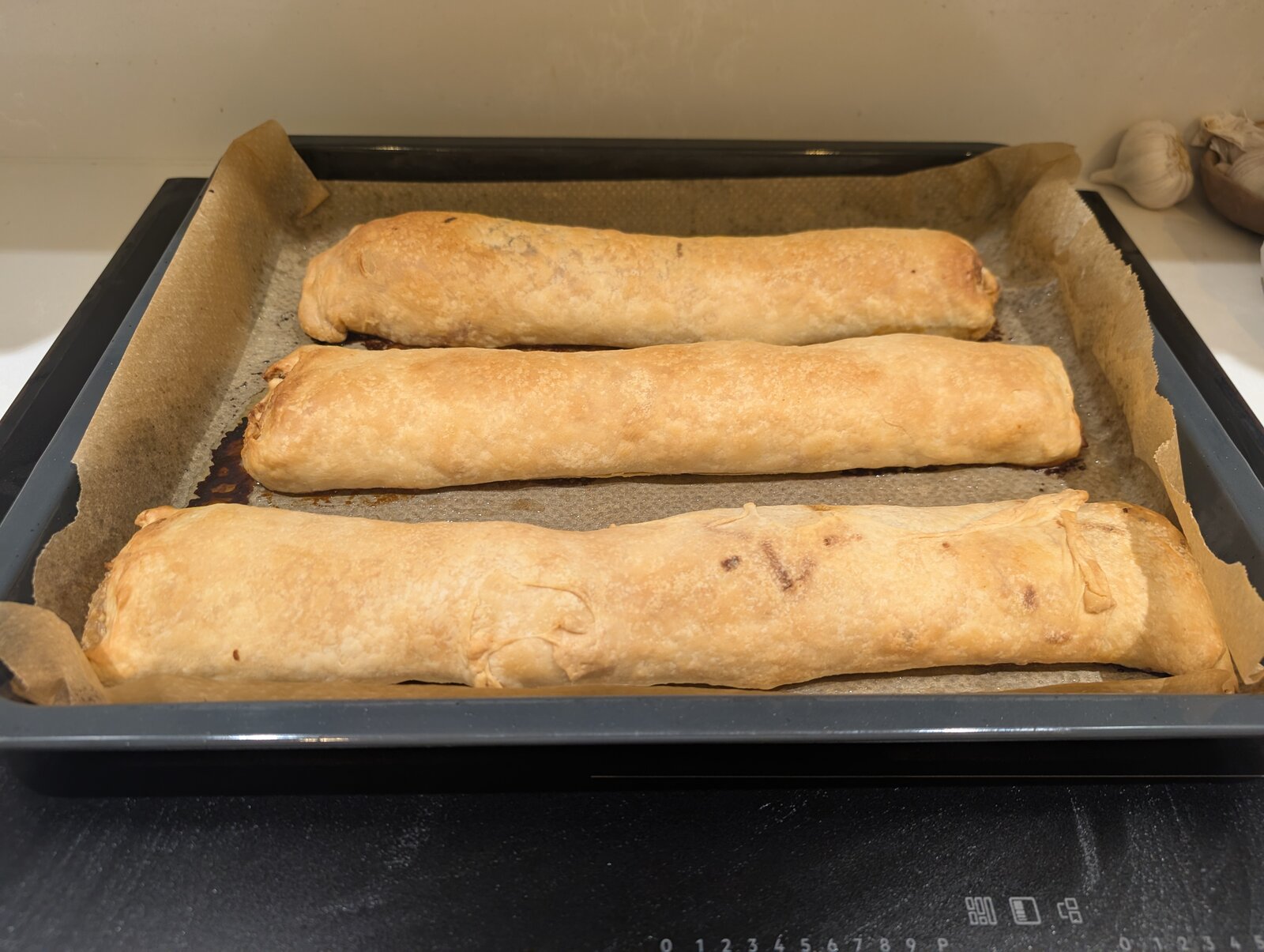
Note: this recipe can be doubled (e.g. 1kg flour, 4kg apples, etc.) to make a bigger strudl.
Reference video: How to make štrudl
Ingredients
Pulled dough
- 520g plain flour
- 250ml lukewarm water
- 1 tsp salt
- 50g oil
- 1 tbsp vinegar
Apple filling
- 2kg sour apples
- Freshly squeezed juice of 2 lemons (to prevent oxidation - not needed if the apples are grated just before laying them onto the dough)
- Ground cinnamon (to taste)
- 100g granulated sugar for sprinkling (add more if you prefer a sweeter strudel — e.g. 150g worked well with Braeburn apples)
- Butter, chilled (optional, to taste) — coarsely grated butter is the best option, but melted butter (mixed into the oil) or small pieces work too
- 100g raisins (optional, can be left out)
Finishing
- Sour cream, for brushing on top
- Icing (dusting) sugar, for dusting on top
At a glance
Prep
Filling, Rolling & Baking
Diagrams
Making the dough
Filling, Rolling & Baking
Detailed instructions
There are 3 stations for preparation:
-
Mixer bowl (for the dough)
-
Large bowl (for the apples)
-
Water jug
Sequence at the mixer bowl station:
-
Sift the 520g of flour into the mixer bowl
-
Start mixing just before adding the water mix
-
You might have to add more water
-
Push the dough down from the mixer's whisk/hook occasionally while it mixes
-
Mix for a while until the dough separates from the bowl
-
It might be easier to knead from here on, but you can mix to the end until the dough is smooth and it must be soft and stretchy
-
Scrape the dough out of the mixer bowl onto a lightly floured worktop
-
Even with a good mixer, it's worth kneading by hand at the end — aim for 8-10 minutes of vigorous kneading, not just a light knead. This is what builds up the gluten network that lets the dough stretch thin later without tearing.
-
If you knead, use flour (not oil) on the worktop to stop the dough sticking; a silicone spatula helps to unstick the dough if it clings to the worktop
-
Throwing/slapping the dough onto the worktop a few times is another way to knead it, and further strengthens the gluten
-
if you knead, you can tell it's getting close if the dough doesn't stick to the board (you might have to add a bit of flour to achieve that)
-
after that place the dough into a bowl
-
cover the dough in oil (to seal it)
-
place the dough into the fridge to rest for an hour (you can leave the dough outside as well)
Sequence at the water jug:
-
Add a heaped teaspoon of salt into the 250 ml of lukewarm water
-
Add 50g of oil to the water as well
-
Add a teaspoon of vinegar to the water as well
-
Stir the water well
-
Slowly pour the water mixture into the mixer bowl while the mixer is running
-
The dough must be very stretchy
Sequence at the large bowl:
-
Peel the 2kg of apples
-
Grate the apples (roughly; through big holes on the grater)
-
Drain/squeeze the grated apples a bit to get rid of excess juice, otherwise the filling ends up too watery. Don't overdo it though — squeeze out just the excess liquid, not all of it, so the filling stays moist.
-
Add the lemon juice to the apples to prevent oxidation
Sequence at the table:
-
Lay the table with a big cloth, fully unfolded, hanging evenly over both sides of the table — this gives you slack to pull the cloth (and the dough with it) back to the centre if the dough migrates to one side while stretching
-
Spread a light dusting of flour on the cloth — just enough to stop sticking; too much dries out the dough's surface and makes it crack when stretched
-
If the dough was rested in the fridge, let it come back to room temperature before stretching — cold dough is stiffer and much more prone to tearing
-
Place the rested dough onto the cloth, elongated
-
With the help of a rolling pin stretch the dough a bit and flatten the edges
-
Make sure the dough doesn't stick to the cloth
-
Spread the oil left-over from the dough onto the stretched dough
-
Let the dough rest here for 5-10 minutes, covered (e.g. with a bowl), to let the gluten relax again before the final stretch — skipping this makes the dough spring back and tear more easily
-
Stretch the dough thin using the backs of your hands/knuckles rather than your fingertips (fingertips/nails tend to puncture it). Work from the centre outward, rotating around the dough a little at a time, until it's thin enough to see your hand through.
-
Keep re-oiling the surface as you stretch, especially any spot that looks like it's starting to dry out or go tacky — a dry patch turns brittle and is where tears tend to start
-
Small tears/holes are normal, not a failure — don't panic or restart. Just pinch the edges of a tear back together (patch with a scrap of dough cut from the thicker rim if needed), or simply leave small holes and avoid laying filling directly over them
// TODO: get a video of how mum stretches the dough
- Spread melted butter mixed with oil over the stretched dough, before adding the apples. Using just oil, or just melted butter, also works — it's up to the baker.
-
Spread the apples all along the long edge, but keep a stretch of the dough near you so you can fold it over the apples later. The strip of apples should be 1/3 of the width along the other edge.
-
Sprinkle ground cinnamon over the apples
- Sprinkle the sugar over the apples, a bit more generously where the apple layer is thicker (you can also mix the cinnamon into the sugar beforehand, instead of sprinkling it separately)
-
Optionally scatter raisins over the apples
-
Optionally dot the apples with butter. The best way is to coarsely grate chilled, hard butter over the apples (like grating Parmesan, but using the large/coarse holes of the grater instead of fine ones). Melted butter mixed into the oil, or small pieces of butter, also work. Alternatively, pour the remaining oil/butter mix evenly over the apples instead.
-
Remove any thick edges of the dough hanging around
-
Fold the dough over the apples and use the cloth along the long edge to keep turning the strudl over itself into a cylindrical roll.
// TODO: get a video of mum folding the strudl with the table cloth
Sequence at the baking tray:
-
Pre-heat the oven to 200°C (start just after grating the apples, so it's ready in time for baking)
-
Line the baking tray with baking paper
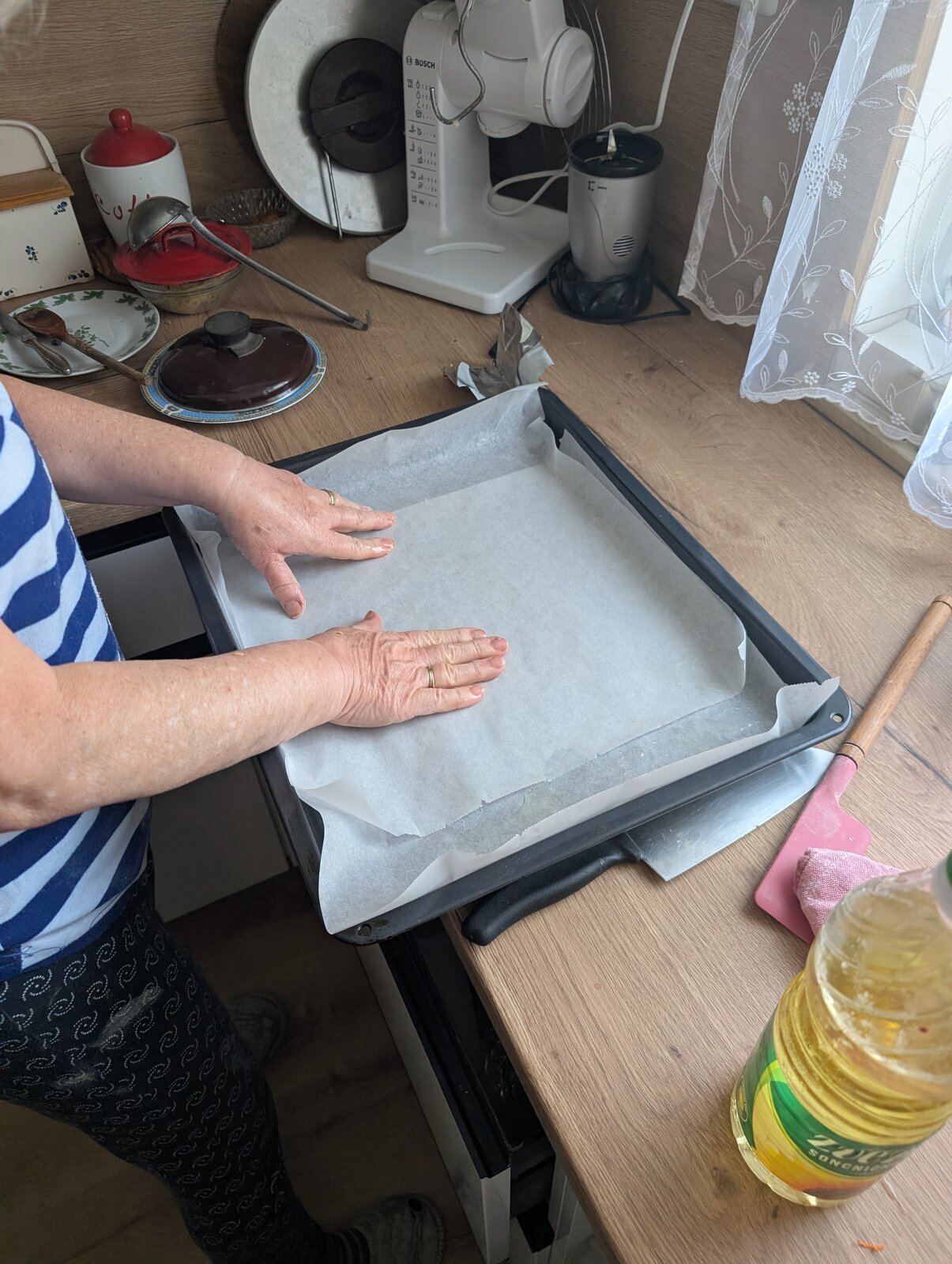
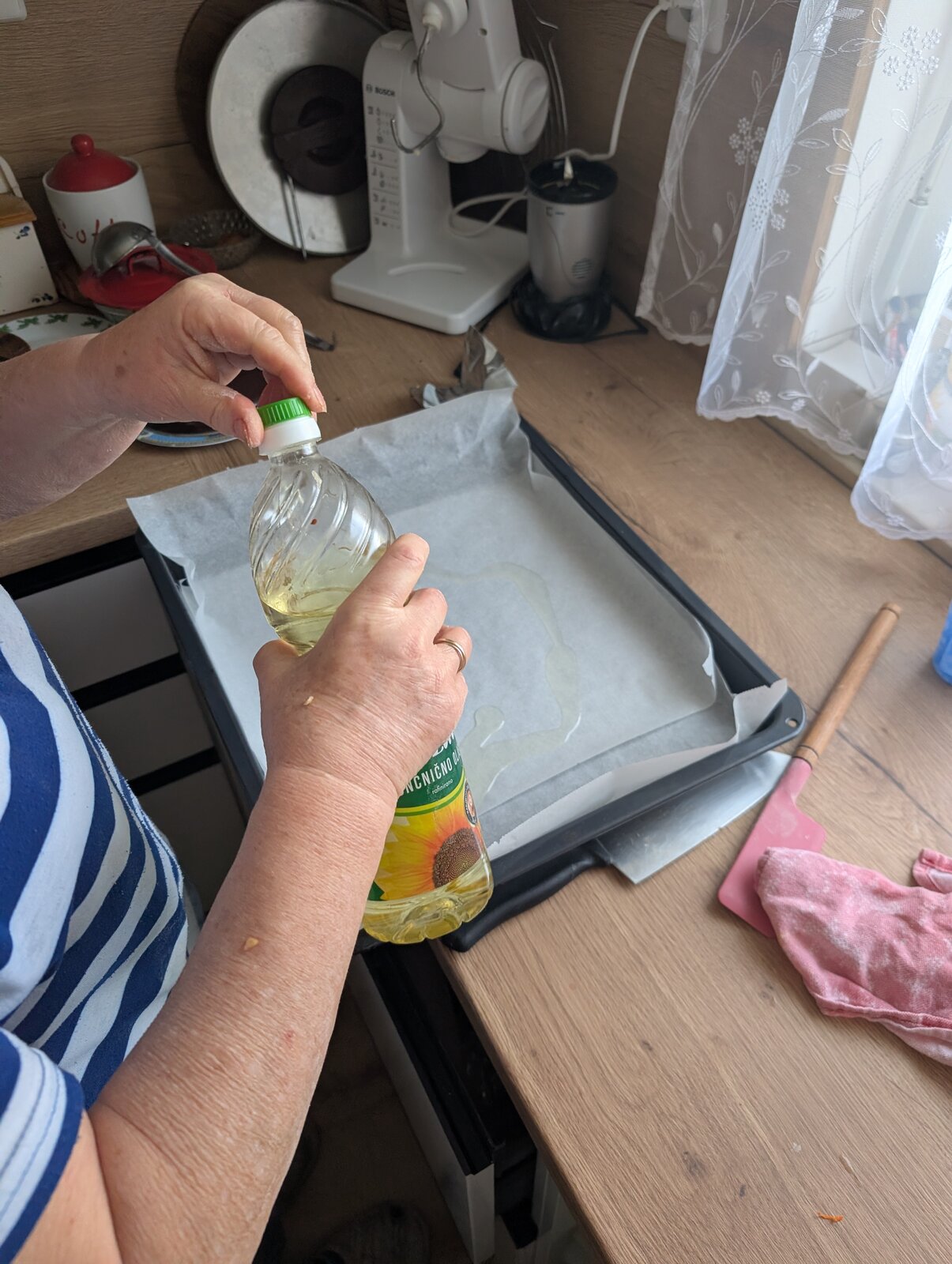
- Drizzle a little oil onto the baking paper
-
Optionally, brush a little oil over the top of the strudl before baking — not strictly necessary, but it helps the crust brown nicer
-
Place the tray in the middle of the oven, or just below middle
-
Bake in a fan electric oven, starting at 200°C until the crust turns golden brown (~15 minutes), then lower to 160°C and continue baking for another 30 to 45 minutes. The strudl should be in the oven for at least 45 minutes in total.
-
Immediately after taking the strudl out of the oven, brush sour cream over the top, then dust it with icing sugar